Magic Numbers for 7 March were 2, 8, 11 & 12. There were no winners so the jackpot for the next draw on Saturday 14 March will be £1750.

Magic Numbers for 7 March were 2, 8, 11 & 12. There were no winners so the jackpot for the next draw on Saturday 14 March will be £1750.
Match Preview
Willand Rovers v Shaftesbury FC
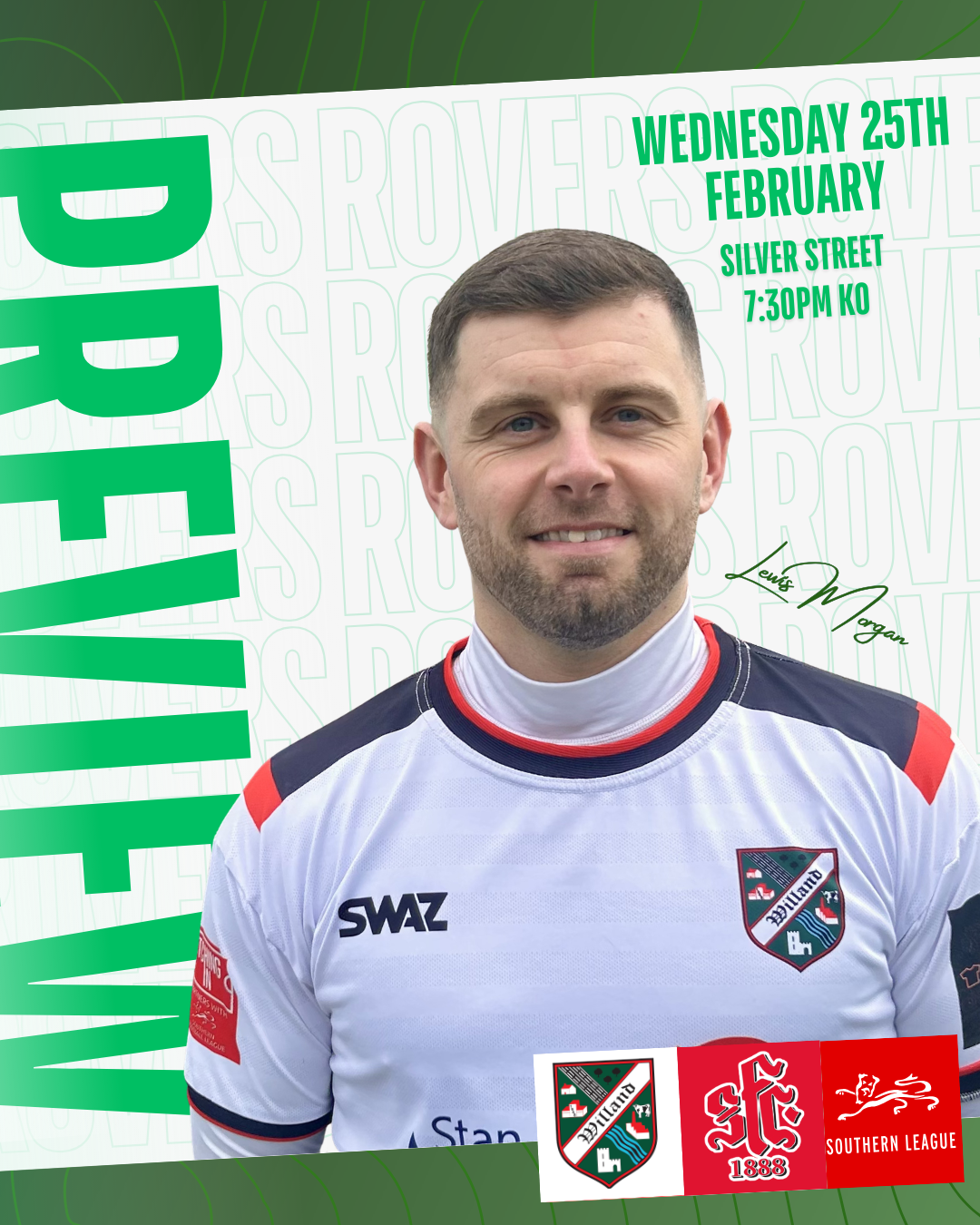
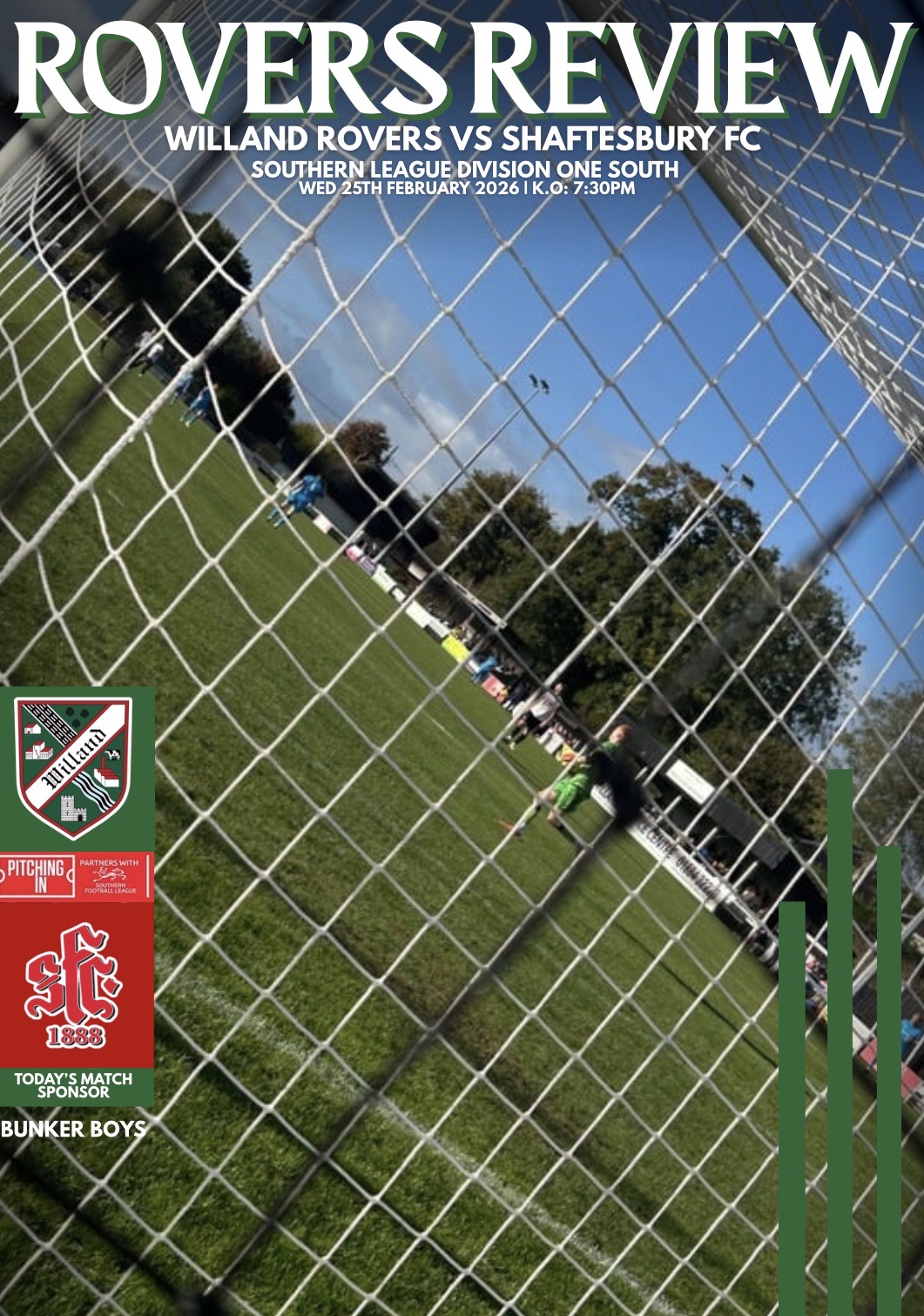
It’s under the floodlights for Rovers tomorrow night as our previously postponed clash with Shaftesbury FC takes place in the Southern Football League Division One South with a 7:30 pm KO at Silver Street.
Last time out for Rovers was a Devon derby where the visitors were Exmouth to the street and with familiar faces back on the turf in both dugouts, a bumper attendance of over 350 packed the village for what was set to be another riveting clash in the Southern League.
The visitors came out on top however with a stunner from Sam Morcom and an important double from Matt Wright. Ben MacIver-Redwood opened his account for Willand in the late stages, but it wasn’t enough for a full comeback, and a midweek game once again provides an opportunity for Rovers to get back on track.
However, Shaftesbury have had a solid season under Jim Milligan who once again is taking the Rockies to new heights where this season they currently sit right outside the playoffs with an opportunity to knock Cleeve out on Wednesday.
Their last outing was a vital home win to Bristol Manor Farm where James Ward, Lewis Brown & Harry Baker provided the goals to secure all three against a Manor Farm side who have had an underwhelming season. Our last clash with the visitors was a 3-2 defeat at Cockrams where Bailey Kempster’s brace put us ahead at the break but the hosts clawed it back when it mattered and took all three on the evening.
One to watch for the visitors would have to be Alefe Santos who’s had a decorated career as he started at Bristol Rovers before making the move over to Derby County. However, Somerset called again for the Brazilian as he joined Yeovil Town. From there he has had multiple spells across a whole host of non-league clubs and currently finds himself on the Dorset border.
The weather has vastly improved, and the pitch has recovered from Saturday. It’s time to once again get behind the boys whilst we look to leap out of the relegation zone. Bring a mate, pack the gate. Up the Rovers!
#WeAreRovers #COYR
Club Statement
Exciting Opportunity to take on the role of Football Secretary.
It is with regret that we announce that our long-standing Football Secretary Dom Clark will be stepping down from his role at the end of the season due to the pressures of an increase in work and family commitments and the long weekly commute to matches.
We are therefore inviting applications from interested individuals for the position of Football Secretary.
This role will involve, but is not limited to, close liaison with the team manager, administration of all player-matters & registrations, liaison with the SFL & the FA, matchday admin (attendance at matches, posting teams on the matchday app and match official management), fixture management (agreement of any rearranged game dates) and liaison with Football Secretaries of opponents prior to each fixture.
We aim to have a suitable person in-post by the end of February so that the new post-holder can work closely with Dom in the final few months of the season and during pre-season to learn the procedures and processes such that they are fully conversant with SFL & FA systems in readiness for the start of the 26/27 season in August.
Please, in the first instance, register your interest by emailing Mike Hawkins, the Club Chairman, at mikehawkins.willandrovers@gmail.com giving a brief resume of your experience or, if you would like an informal chat regarding the club and more information on the role, call him on 07870727120.
The Club would publicly express its gratitude for the dedication and hard work Dom has put in over the past fourteen years and would thank him most sincerely for his contribution in helping to elevate Willand Rovers to the Step 4 status it now holds. Everyone at the Club would express their very best wishes to Dom for the future.
Mike Hawkins, Chairman WR
𝓛𝓲𝓿𝓮 𝓶𝓾𝓼𝓲𝓬 🎤
Willand Rovers are excited to announce we have China Grove playing at the club on Saturday 14th March.
This is again a free event so we would love to see you all there supporting a local duo.
Clubhouse/Bar open from 4pm
Everyone welcome
Willand Rovers vs Exmouth Town
I think there are more similarities than differences between religion and football. Both involve a sense of belonging and ritual.” — Eric Cantona
Football and religion have always been strange bedfellows. As an agnostic, the similarities have long fascinated me; such as Christians and Muslims clash despite worshipping the same deity, and Exeter and Plymouth look forward to each other’s demise despite playing the same sport in the same county.
There has always been a link between football and religion, whether it be shouted brazenly from the terraces of Ibrox or Parkhead or whispered quietly through history.
In fact, some of the biggest names in the game owe their very existence to church halls and religious organisations: Aston Villa, Everton, Southampton and Fulham among them. What began as parish projects and charitable outreach grew into institutions that now command global followings.
The language of the game is soaked in faith. Football may not be life and death, at least according to Mr Shankly, but belief in the manager’s gospel, praying for a goal in the final minutes, redemption after defeat are the rhythms of the sport. Grounds are spoken of as cathedrals; fans attend with a devotion that borders on ritual.
From muddy parish fields to floodlit stadiums, the connection has never truly faded. It has simply changed shape. And on afternoons when the rain is falling and the faithful are gathered regardless, Saturday at three still feels like the closest thing many have to church.
I come to talk about religion as we enter Lent. Ask your average football fan about forty days and forty nights and they’ll probably talk about the consecutive timeline of rain we’ve all had to endure in the South West this year, or the amount of time it seems like their team has managed to beat the weather and actually play a game.
Those more astute might even note that it’s the number of days since their star striker gave up trying.
Many consider Lent to be a period when we give something up in order, perhaps, to grow closer to our faith, but for many Christians it is just as much about taking something up, whether that be acts of charity, volunteering, or helping others.
Of course, for many, Lent simply leads directly to the first major event that as a collective nation we celebrate in the year. No, not Easter — bank holidays.
But before the long weekend, and before the culmination of another season, come the small sacrifices. The giving up. The taking up. The quiet reflection on what really matters.
And that is where football mirrors faith most clearly.
Because every Saturday offers its own ritual. The same walk to the ground. The same pre-match discussions, with the same friends. The same hope renewed, no matter what the league table says. We give up our afternoons, our voices, sometimes our sanity. In return we get belonging. Community. Shared suffering and occasional redemption.
You don’t have to believe in miracles to understand that feeling when a late goal flies in. You don’t need a hymn sheet to recognise the swell of a terrace in full voice. And you certainly don’t need a pulpit to know that devotion is measured in turning up when the weather is biblical and the odds are against you.
So as Lent asks questions about sacrifice and renewal, perhaps it’s fitting that Saturday’s at Silver Street provide their own tests of faith.
There are few fixtures on the calendar that need added spice, but a Devon derby under a brisk February sky at Silver Street rarely disappoints. Willand Rovers welcomed promotion hopefuls Exmouth Town knowing the visitors would arrive in confident mood, having put three past Falmouth the previous week.
To add to the derby atmosphere, the visitors’ squad included Tom Bath and Ross Edwards, recent departees from Silver Street, along with Ben Griffin and Aaron Dearing — all familiar faces to the home support.
Willand began brightly enough, but it was Exmouth who struck in the seventh minute. A free-kick, central but at inviting range, was taken by Sam Morcom. His effort was as clean as it was cruel, arcing beyond Rhomey and nestling in the top corner. It was a strike worthy of winning any contest and left Willand with an early mountain to climb.
To their credit, Rovers refused to wilt, forcing a duo of good saves from Dearing before Silver Street briefly erupted on fifteen minutes as the ball found the net. The celebrations were cut short, however, the referee adjudging there to have been contact on the Exmouth number one in the build-up. From one end to the other, football can turn in seconds, and Willand were left frustrated.
The contest grew increasingly combative as the half wore on, Ford requiring treatment after a heavy collision as the derby edge sharpened. Exmouth, though, began to look dangerous on the counter, and the visitors doubled their advantage five minutes before the interval. A teasing in-swinging cross caused panic in the Willand area and, amid the scramble, Matt Wright was on hand to prod home from close range.
Half-time: Willand Rovers 0 – 2 Exmouth Town
The second half began with Willand on the front foot, winning a number of corners that culminated in Ford trying his luck from distance with an effort that drifted toward the heavens.
The home side continued to press forward, only to be thwarted on several occasions by Dearing, who was proving an obstinate barrier, including an impressive point-blank stop on 79 minutes that preserved his side’s two-goal lead.
Right at the start of injury time, Willand finally found their reward. Good work down the right from Dorothy presented MacIver-Redwood with the simplest of tasks, and the striker gratefully headed into an open net to reduce the arrears.
The final minutes were played largely in the Exmouth half, hopeful balls launched and second phases contested with increasing desperation. Yet the visitors stood firm, clearing their lines and managing the clock with the sort of pragmatism that promotion-chasing sides tend to possess.
For Willand, there was plenty of endeavour and no shortage of heart, but ultimately the cutting edge was missing and they were punished by two decisive first-half moments.
For the management team, a quick turnaround to another home game on Wednesday. For the fans, eleven days into Lent, now isn’t the time to start giving up.
Full-time: Willand Rovers 1 – 2 Exmouth Town
Magic Numbers for 21 February were 8, 13, 17 & 23. There were no winners so the jackpot for the next draw on Saturday 28 February will be £1700.
0e603bdc-14e7-442b-9339-b6d4d49067e4